
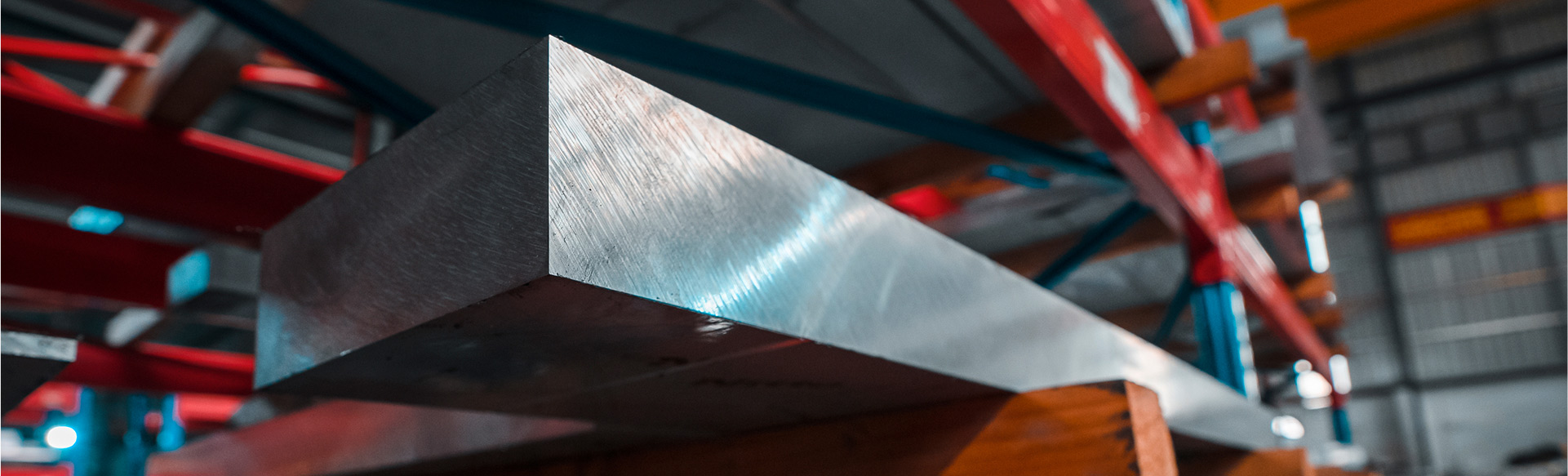
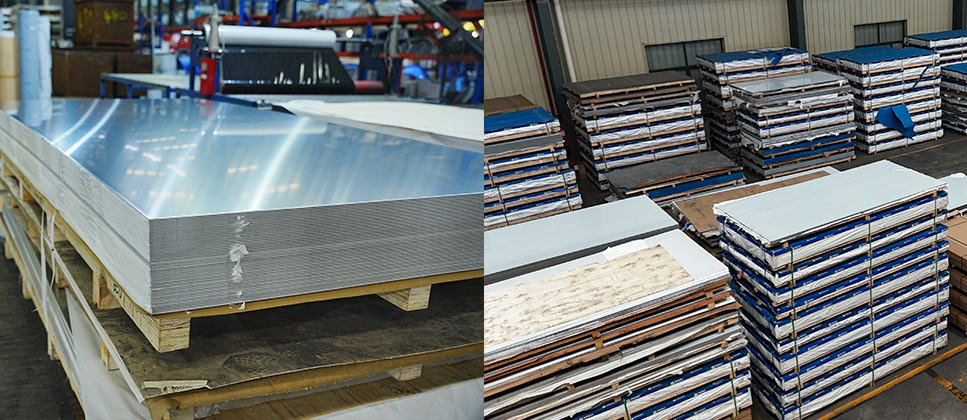
5083 aluminum plate belongs to Al-Mg-Mn series rust-proof aluminum alloy, which has ultra-high corrosion resistance, excellent weldability and high strength. It is the preferred material for ships, marine engineering and chemical equipment.
National standard (GB/T): 5083 (old brand LF4).
American Standard (AMS): ASTM B928 (Marine Grade).
European standard (EN): EN 485-2 (AlMg4.5Mn0.7).
ISO standard: AlMg4.5Mn (ISO 209).
Main component range (mass percentage)
element | Content range (%) | effect |
Magnesium (Mg) | 4.0~4.9 | Improved strength and seawater corrosion resistance |
Manganese (Mn) | 0.4~1.0 | Refining grains and enhancing crack resistance |
Chromium (Cr) | ≤0.05~0.25 | Improved corrosion resistance |
Iron (Fe) | ≤0.40 | Impurity Control |
Silicon (Si) | ≤0.40 | Impurity Control |
Copper (Cu) | ≤0.10 | Avoid reducing corrosion resistance |
Zinc (Zn) | ≤0.25 | Impurity Control |
Features:
High magnesium (4.0~4.9%) → Extremely resistant to seawater corrosion.
Low copper (≤0.1%) → avoids electrochemical corrosion.
state | Tensile strength (MPa) | Yield strength (MPa) | Elongation (%) | Hardness (HB) |
O (Annealed) | 270~350 | 125~160 | 16~22 | 70~90 |
H111 (work hardening) | 275~380 | 150~200 | 12~18 | 75~95 |
H116/H321 (Marine) | 290~400 | 200~250 | 10~15 | 80~100 |
Features:
Its strength is close to that of mild steel, but it is lightweight (density 2.66 g/cm³).
Excellent low temperature performance, suitable for polar ships and LNG storage tanks.
Density: 2.66 g/cm³ (slightly lower than 5052).
Melting point: 570~640℃.
Thermal conductivity: 125 W/(m·K).
Electrical conductivity: 29% IACS (slightly lower than 5052).
Thermal expansion coefficient: 23.8×10⁻⁶/℃ (20~100℃).
advantage:
Super corrosion resistance: especially resistant to seawater and salt spray, far exceeding 2A12 and 6061.
Excellent weldability: TIG/MIG/laser welding is available, and the strength retention rate after welding is high.
High plasticity: suitable for cold stamping, bending and other processing (annealing elongation ≥16%).
Anti-stress corrosion: suitable for high-pressure vessels and long-term marine service environment.
shortcoming:
Not heat treatable and hardening: Strength can only be improved by cold work hardening (H state).
Cutting performance is average: requires sharp-edged tools, easy to stick to the tool.
Shipbuilding and offshore engineering:
Hull structure, deck, bulkhead (in compliance with classification society standards such as DNV, ABS).
Offshore oil platforms, submersible shells.
Chemical equipment:
Acid and alkali storage tanks and pressure vessels (corrosion resistance is better than stainless steel).
Transportation:
Subway/high-speed rail bodies, liquefied natural gas (LNG) transport tanks.
Military industry:
Amphibious armored vehicles and shipborne equipment.
(1) Cold working
Annealed state (O): suitable for deep drawing and stretching (elongation>16%).
Semi-hard (H111/H116): Balanced strength and formability.
(2) Welding process
Welding methods | applicability | Recommended welding wire |
TIG welding | High precision thin plate | ER5356、ER5183 |
MIG welding | Efficient welding of medium and thick plates | ER5356、ER5556 |
Laser welding | Precision Parts | Special protective gas is required |
Note:
The surface needs to be cleaned (the oxide film removed) before welding.
No heat treatment is required after welding, but anti-corrosion treatment (such as anodizing) is recommended.
Anti-corrosion and surface treatment
Natural corrosion resistance: Can be used for a long time in marine environment without coating.
Anodizing: Improve surface hardness (film thickness 10~20μm).
Spraying/aluminum coating: used for exterior parts or extreme environments (such as chemical equipment).
